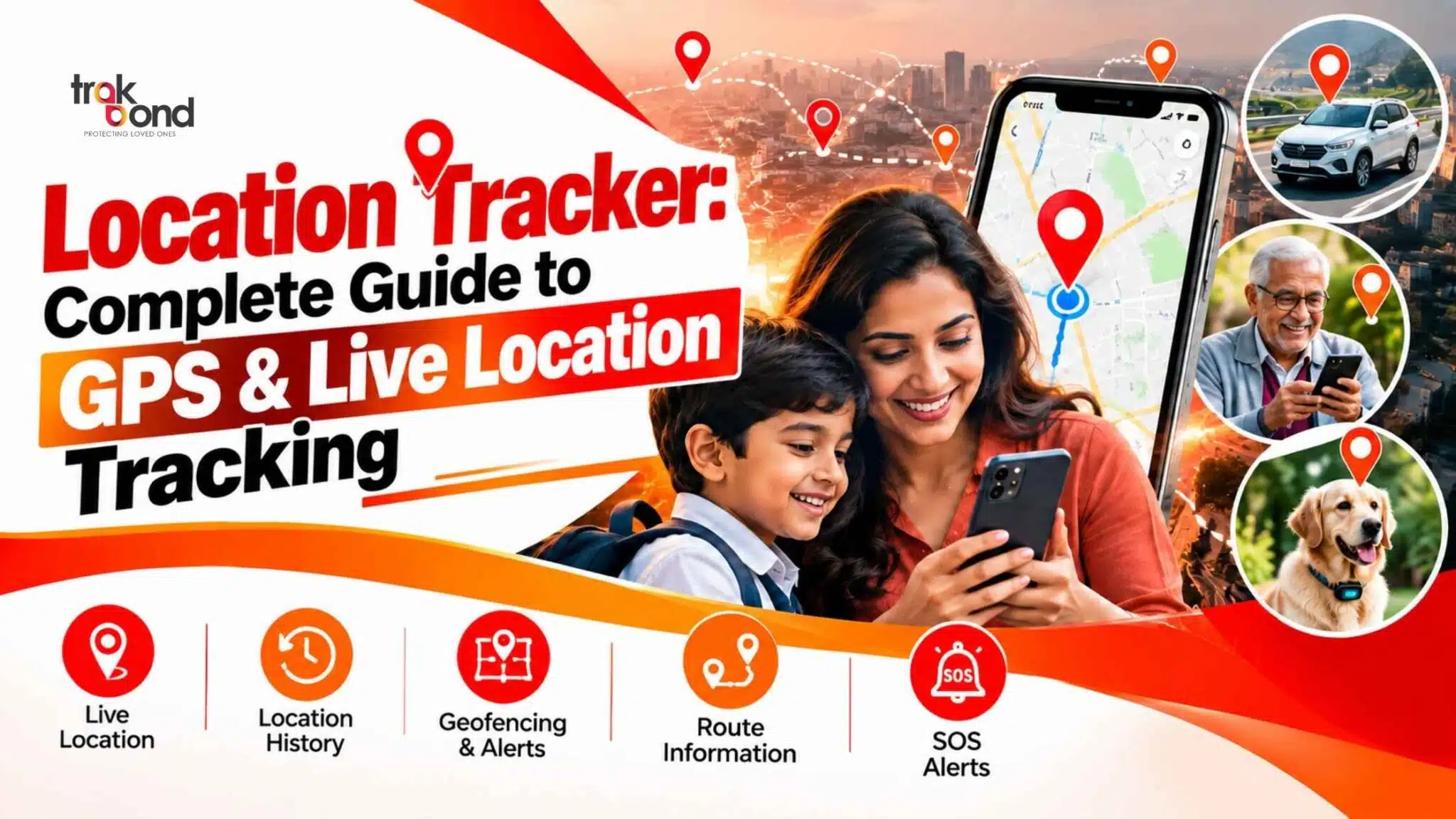
Location Tracker: Complete Guide to GPS & Live Location Tracking
A location tracker is a technology that helps determine and share the real-time or recent location of a person, vehicle, device, or other asset using technologies such as GPS, mobile networks, Wi-Fi, and Bluetooth. Today, location tracking is widely used for family safety, child protection, elderly care, travel, fleet management, and personal security.
What Is a Location Tracker?
A location tracker is a device, application, or technology that determines the approximate geographical position of a person, device, vehicle, or object.
The location may be calculated using:
- GPS satellites
- Mobile/cellular networks
- Wi-Fi networks
- Bluetooth
- A combination of these technologies
How Does a GPS Location Tracker Work?
A GPS location tracker generally works through several stages.
1. The Device Determines Its Location
The tracker uses GPS signals to calculate its geographical position. GPS can provide latitude and longitude coordinates that identify where the device is located.
2. Connectivity Sends the Location
The tracker needs a way to transmit the location information. Depending on the product, this may happen through:
- Cellular networks
- Wi-Fi
- Bluetooth
- Internet connectivity
3. The Location Appears on an App or Platform
The location data is sent to an authorized smartphone application or web platform.
The user may then see the device’s location on a digital map.
4. The System Updates the Location
Depending on the device, network availability, battery level, settings, and tracking mode, the location may update periodically or more frequently.
GPS vs Mobile Location Tracking: What’s the Difference?
GPS is only one part of modern location tracking.
GPS Tracking
GPS uses signals from satellites to calculate geographical coordinates. It is particularly useful outdoors where the device has a clear view of the sky.
Cellular Tracking
Cellular tracking uses mobile network information to estimate a device’s location. It can be useful when GPS reception is weak or unavailable, although its accuracy can vary depending on network conditions and location.
Wi-Fi Location
Wi-Fi positioning can help determine location using nearby Wi-Fi networks. It can be particularly useful indoors or in areas where GPS signals are weaker.
Bluetooth-Based Tracking
Bluetooth can help locate nearby devices or objects over relatively short distances. It is often used for proximity-based tracking rather than independent long-distance live tracking.
Hybrid Location Tracking
Many modern tracking systems combine multiple technologies.
This combination can improve the practical reliability of location tracking across different environments.
What Is Live Location Tracking?
Live location tracking means viewing updated location information while a person or device is moving.
Depending on the system, live location tracking may include:
- Current location
- Movement updates
- Location history
- Geofencing
- Arrival notifications
- Departure alerts
- SOS alerts
- Route information
Location Track: How Accurate Is It?
One of the most common questions about a location track is accuracy.
Outdoor GPS tracking can often provide relatively precise positioning, while accuracy may be affected by:
- Tall buildings
- Indoor environments
- Underground locations
- Dense forests
- Poor satellite visibility
- Weak mobile connectivity
- Device hardware
- Weather and environmental conditions
- Battery-saving settings
Therefore, a location tracker should generally be understood as a location-awareness and safety technology rather than an instrument that guarantees an exact position at every moment.
Why Do People Use Location Trackers?
Location tracking has become useful across many everyday situations.
1. Child Safety
Parents and guardians may use a GPS location tracker to stay informed about a child’s whereabouts when the child is travelling between home, school, tuition, sports activities, or other familiar locations.
A child-focused tracker may provide features such as:
- GPS location
- Safe-zone alerts
- SOS functionality
- Location history
- Arrival/departure notifications
- School-mode settings
The purpose should be safety and communication rather than unnecessary surveillance.
2. Elderly Family Members
Location tracking can also support families caring for elderly relatives.
For example, if an elderly family member goes for a walk or travels independently, authorized family members may be able to check their location.
This can provide additional reassurance, especially when the tracker includes an emergency alert feature.
3. Teenagers
Teenagers often become increasingly independent. Families may use location sharing to maintain a safety connection while respecting appropriate privacy.
4. Travel Safety
During travel, location tracking can help families stay connected.
For example, family members may share their locations during:
- Road trips
- Airport transfers
- Outdoor activities
- School trips
- Long-distance journeys
5. Vehicle Tracking
GPS tracking is also widely used for vehicles.
Businesses and individuals can use vehicle trackers to understand:
- Vehicle location
- Travel routes
- Stops
- Movement history
- Fleet activity
The exact functionality depends on the tracking device and service.
What Is Geofencing?
Geofencing is a location-based feature that creates a virtual boundary around a particular area.
For example, a parent could establish a virtual zone around:
- Home
- School
- Tuition centre
- Relative’s house
- Sports facility
When the tracked device enters or leaves the defined area, the system may generate an alert.
Example
Suppose a child’s school is configured as a safe zone.
Geofencing can therefore turn raw location data into practical safety notifications.
Location History vs Live Location
These two concepts are often confused.
Live Location
Live location focuses on the device’s current or most recently updated position.
Location History
Location history records previous location information over a period of time, depending on the product and its settings.
For example, location history might help an authorized user understand:
- Where the device travelled
- When it reached a particular area
- Which route it followed
- Where it stopped
What Makes a Good Location Tracker?
Choosing a location tracker involves more than checking whether it has GPS.
Consider the following factors.
GPS Performance
A reliable tracker should provide useful location information under normal operating conditions.
Connectivity
The device needs an appropriate communication method to transmit location information.
Battery Life
Frequent location updates can consume more battery power. A tracker with practical battery performance can be more useful for everyday use.
SOS or Emergency Features
For family safety, an emergency alert feature can be valuable when appropriately configured.
Geofencing
Safe-zone alerts can make location tracking more useful than simply viewing a map.
Location History
Some users may want historical location information for travel or safety purposes.
Privacy and Security
Location information is sensitive data. Users should understand:
- What information is collected
- How it is transmitted
- Who can access it
- How long it is retained
- Whether it can be deleted
- Whether third parties receive the data
Ease of Use
A tracking system should be easy for authorized users to understand. A complicated interface can reduce the usefulness of important safety features.
How to Use a Location Tracker Responsibly
Location tracking provides useful safety benefits, but responsible use matters.
Use Consent Where Appropriate
Adults should generally know when their location is being shared. For children, parents or legal guardians may have legitimate safety responsibilities, while older children and teenagers may benefit from age-appropriate conversations about privacy.
Explain Why Tracking Is Used
Instead of presenting tracking as secret surveillance, families can explain that the technology is being used for safety.
Limit Access
Only authorized people should have access to location information.
Protect Account Credentials
Strong passwords, secure devices, and appropriate account security can help reduce unauthorized access.
Review Privacy Settings
Regularly check who can see location information and whether old data is being retained unnecessarily.
Can a Phone Number Alone Track Someone’s Exact Location?
A common online search is “track location by phone number.”
However, a phone number alone does not normally provide an ordinary user with a precise, real-time GPS position.
Location information generally requires appropriate technical access through:
- A tracking application
- A GPS-enabled device
- Location-sharing functionality
- Cellular network systems
- Authorized services
Never rely on services that request sensitive credentials or make unrealistic claims about unrestricted location access.
Location Tracker Apps vs Dedicated GPS Trackers
Both smartphone apps and dedicated devices can support location tracking, but they serve different needs.
Location Tracking Apps
A smartphone app can use the phone’s built-in location services.
Advantages may include:
- No separate tracker required
- Familiar smartphone interface
- Easy location sharing
- Additional communication features
Dedicated GPS Trackers
A dedicated GPS location tracker is designed specifically for tracking.
Depending on the product, it may offer:
- Dedicated GPS hardware
- Cellular connectivity
- Longer-term tracking functionality
- SOS buttons
- Geofencing
- Location history
- Family safety features
A dedicated tracker can be particularly useful when the person being tracked does not need a full smartphone.
How Trakbond Can Support Family Location Safety
For families looking for a dedicated tracking solution, Trakbond focuses on location and safety use cases through connected tracking devices and related features.
Depending on the product and configuration, a family-focused tracker can help with functions such as:
- Real-time location visibility
- GPS-based tracking
- Geofencing
- Location history
- SOS alerts
- Family location awareness
- Route monitoring
For parents, the goal is not simply to know where a device is. The broader objective is to create a practical safety connection between family members.
A screen-free tracking approach can also be useful for parents who want location and safety functionality without giving a child unrestricted access to a smartphone.
Common Location Tracker Questions
Is a GPS location tracker accurate?
GPS trackers can provide useful location information, but accuracy varies depending on satellite visibility, environmental conditions, device hardware, connectivity, and other factors.
Can location tracking work indoors?
It can, but GPS signals may be weaker indoors. Depending on the system, Wi-Fi, cellular positioning, or other technologies may supplement GPS.
Does a location tracker need internet?
A tracker generally needs some form of connectivity to transmit its location to another device or platform. The specific requirement depends on the product.
Does GPS work without mobile network connectivity?
A GPS receiver can calculate its position without cellular data, but a connected tracker generally needs another communication method to transmit that position to a remote user.
What is the difference between GPS and a location tracker?
GPS is a positioning technology. A location tracker is the broader system or device that determines, transmits, and presents location information.
Can I track a family member’s location?
Location sharing can be appropriate when it is based on consent or legitimate parental/guardian safety responsibilities. The exact method depends on the person’s device and the tracking service.
Does live location mean the location updates every second?
Not necessarily. “Live” generally refers to current or frequently updated location information. Update intervals depend on the tracker, network, battery, settings, and environmental conditions.
Final Thoughts
A location tracker combines technologies such as GPS, cellular networks, Wi-Fi, and software to provide useful information about where a device or person is located. From child safety and elderly care to travel and vehicle tracking, location technology has become an important part of modern connected life.
A GPS location tracker can provide more than coordinates. Features such as live location, location history, geofencing, route information, and SOS alerts can turn location data into practical safety tools.