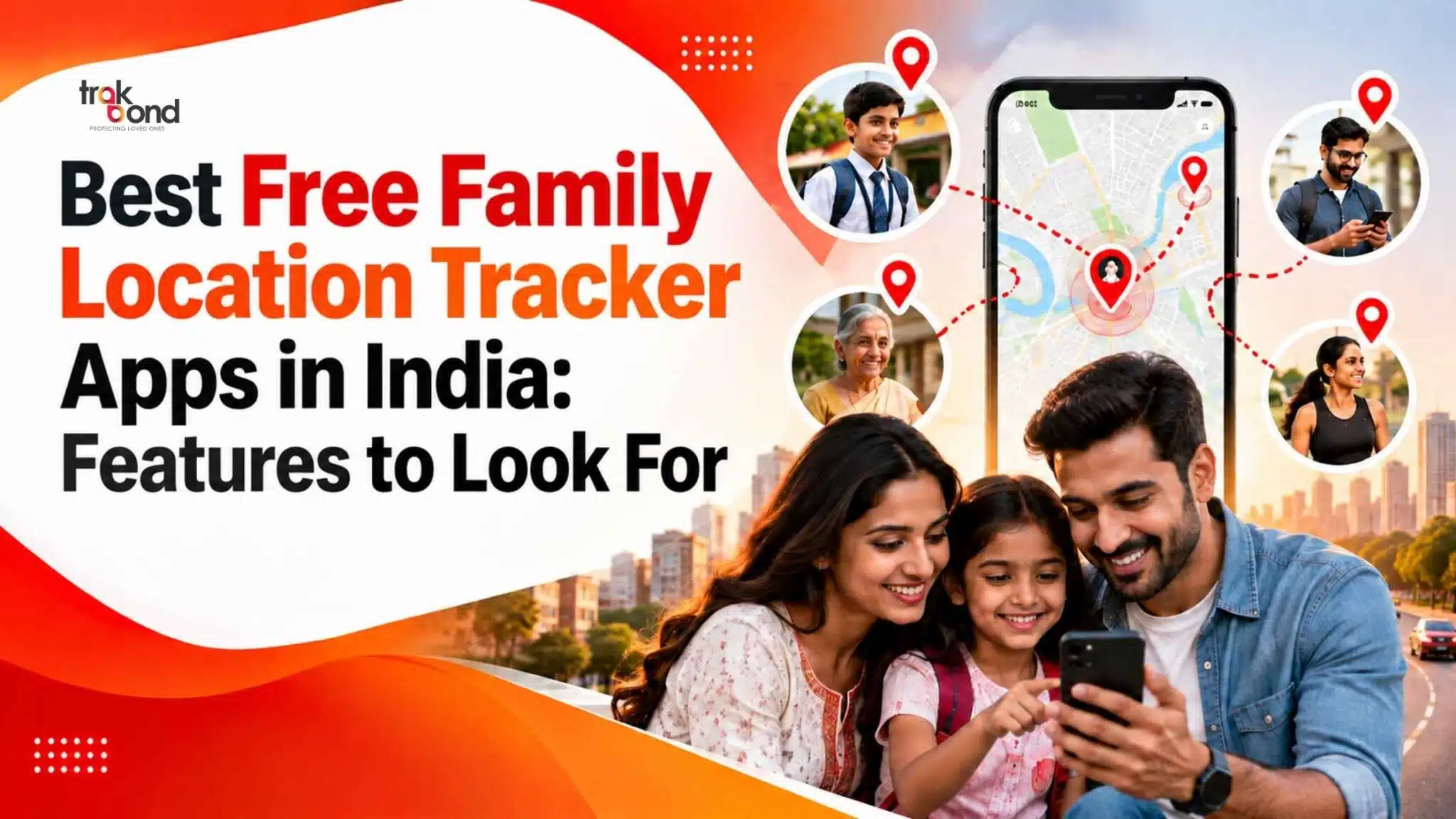
Best Free Location Tracker Apps for family in India: Features to Look For
This guide explains what to look for when comparing a family tracker, mobile tracker free options, and other location-sharing solutions in India.
Finding the right free location tracker can make it easier for families to stay connected while travelling, commuting, attending school, or managing everyday routines. A family member can share their live location with another trusted person, helping everyone know where they are without needing constant calls or messages.
This guide explains what to look for when comparing a family tracker, mobile tracker free options, and other location-sharing solutions in India.
What Is a Free Location Tracker?
A free location tracker is an app or service that allows users to share or view location information without necessarily paying a subscription. Depending on the application, location information may be determined using GPS, Wi-Fi, mobile networks, or a combination of these technologies.
Why Are Family Location Tracker Apps Useful in India?
India has a large and diverse population, and family members often travel through busy cities, public transport networks, schools, colleges, workplaces, and unfamiliar areas. A location-sharing solution can provide an additional way for family members to stay connected.
What Should You Look for in a Free Location Tracker?
Not every free location tracker provides the same experience. Before choosing an app, compare its features carefully.
1. Accurate Real-Time Location
Location accuracy should be one of the first things to check.
A good tracking solution should update location frequently enough to be useful while avoiding excessive battery consumption. GPS can provide precise positioning outdoors, while Wi-Fi and cellular networks can help when GPS signals are weak.
Look for:
- Live location updates
- Reasonable location accuracy
- Reliable map display
- Location refresh options
- Performance in different environments
2. Simple Location Sharing
A useful location sharing app should make sharing straightforward.
Ideally, family members should be able to choose who can view their location and for how long. Temporary sharing can be useful when someone is travelling or meeting another person, while ongoing sharing may be appropriate for trusted family groups.
3. Family Groups
If several people need to stay connected, family-group functionality can make tracking easier.
4. Geofencing and Location Alerts
Geofencing can be an important feature for families.
A geofence creates a virtual boundary around a location such as a school, home, office, or activity centre. When supported, the system can notify authorised family members when someone enters or leaves that area.
When comparing apps, check:
- Number of geofences allowed
- Entry and exit alerts
- Notification reliability
- Customisation options
- Battery impact
5. SOS and Emergency Features
A family tracking solution becomes more useful when it also supports emergency communication.
An SOS feature may allow a user to quickly alert selected contacts. Depending on the product, an emergency alert could include the user’s current location.
6. Location History
Some users need more than a live map. Location history can show where a device has been during a selected period, depending on the app and its privacy settings.
However, users should check:
- How long history is retained
- Who can access it
- Whether it can be deleted
- Whether historical tracking is included in the free plan
More tracking data is not automatically better. Privacy should remain an important consideration.
Mobile Tracker Free: What Does “Free” Really Mean?
When searching for a mobile tracker free solution, users should carefully examine the terms of the service.
“Free” can mean different things. Some applications provide completely free basic location sharing, while others offer a free trial or limited free functionality and require a subscription for advanced features.
Before installing an app, check:
- Which features are free
- Whether there is a time limit
- Whether advertisements are displayed
- Whether multiple users can be added
- Whether location history is restricted
- Whether emergency features require payment
- What happens when the free allowance is exceeded
A comparison based only on the word “free” may therefore be misleading.
Privacy Should Be a Major Consideration
Location data is highly personal. A family location tracker should therefore provide clear privacy controls.
Important questions include:
- Who can see the location?
- Is location sharing optional?
- Can users stop sharing?
- Is location information encrypted?
- Is data shared with third parties?
- How long is location information retained?
- Can users delete their information?
GPS, Wi-Fi and Cellular Location: What Is the Difference?
Modern location tracking can use several technologies.
GPS:
GPS can provide highly accurate outdoor positioning by communicating with satellites. Accuracy may decrease indoors or in areas where satellite signals are obstructed.
Wi-Fi:
Wi-Fi positioning can help determine approximate location using nearby networks. It can be particularly useful in some indoor environments.
Cellular networks:
Mobile networks can provide location information based on nearby cellular towers. This can be useful when GPS or Wi-Fi information is limited, although accuracy can vary.
Many modern tracking systems combine multiple signals to provide a more reliable location estimate.
Battery Consumption Matters
A location tracker that constantly uses GPS and mobile data can consume considerable battery power.
This is especially important when tracking children or family members throughout the day. A device with a dead battery cannot provide a live location.
When comparing options, look for:
- Battery-efficient location updates
- Adjustable tracking frequency
- Low-power modes
- Battery status information
- Alerts for low battery
A balance between location frequency and battery life is often more practical than continuous maximum-frequency tracking.
Ease of Use Is Important for Families
The best technology is not useful if family members find it difficult to operate.
A good family tracking app should have:
- Simple registration
- Clear permissions
- Easy family invitations
- Straightforward maps
- Understandable notifications
- Easy-to-find privacy controls
- Simple sharing and stopping options
Consider the age and technical ability of every family member before choosing a solution.
Free Location Tracker vs Dedicated GPS Tracker
Families may also need to decide between a smartphone-based location app and a dedicated GPS tracking device.
The right option depends on factors such as age, device availability, battery requirements, communication needs, and the level of tracking functionality required.
Why Trakbond Can Be Considered for Family Location Tracking
For families looking beyond a basic smartphone location-sharing app, Trakbond offers GPS-enabled tracking solutions designed around family connectivity and safety.
When comparing Trakbond with a standard location sharing app, families should evaluate the exact model, current plan, supported features, connectivity requirements, and pricing rather than assuming every feature is included in every product.
Questions to Ask Before Choosing a Family Tracker
Before downloading or purchasing a location tracking solution, ask these questions:
Is the location tracker genuinely free?
Check whether the free service is permanent or only a trial. Also check whether essential features are restricted.
Does it support real-time tracking?
A static or infrequently updated location may not be sufficient for families who need live location information.
Can I control who sees the location?
Privacy and access controls are essential. Location should only be visible to authorised people.
Does it provide emergency alerts?
If family safety is a key requirement, check whether SOS or emergency features are included.
Does it work without a smartphone?
This question is particularly important when selecting a tracker for young children.
How much battery does it consume?
Check both the tracking device’s battery life and the phone’s battery requirements.
Is location history available?
If historical journeys matter, check the retention period and whether the feature is included in the free version.
How to Compare Free Location Tracker Apps in India
A simple comparison checklist can make the selection process easier.
| Feature | What to Check |
| Live location | How frequently location updates |
| GPS accuracy | Performance in different environments |
| Family sharing | Number of authorised members |
| Geofencing | Entry and exit alerts |
| SOS | Emergency alert availability |
| Location history | History duration and access |
| Battery | Expected battery consumption |
| Privacy | Data collection and sharing policies |
| Compatibility | Android/iOS or dedicated device support |
| Free plan | Features included without payment |
| Paid plans | What additional features cost |
| Support | Availability of customer assistance |
This approach helps families compare solutions according to actual requirements instead of choosing solely based on app ratings or the word “free.”
Safety and Responsible Location Sharing
Location tracking should support communication and safety, not replace trust.
Families should establish clear expectations around tracking. For younger children, parents may manage location sharing more directly. With teenagers and adults, it can be helpful to discuss when location sharing is expected and when privacy is appropriate.
Users should also avoid sharing live location publicly or with unknown people. Location information should generally be restricted to trusted contacts.
Final Thoughts
A free location tracker can be a useful starting point for families in India who want convenient location sharing without immediately purchasing a dedicated tracking device or subscription.
However, the right choice depends on more than whether an app is free. Families should compare live location accuracy, battery consumption, privacy controls, geofencing, SOS alerts, location history, family groups, ease of use, and device compatibility.
FAQs
1. What is the best free location tracker for families?
The right option depends on your requirements. Compare live location, privacy controls, geofencing, SOS alerts, location history, battery consumption, and the limitations of the free plan before choosing.
2. Can I use a mobile tracker free of cost?
Some services provide free location-sharing features, while others offer limited functionality or trials. Always check the current terms and features included in the free plan.
3. How does a family location tracker work?
Most family trackers use GPS, Wi-Fi, cellular networks, or a combination of these technologies to determine location. The authorised location can then be displayed on a map.
4. Is location tracking safe?
Location tracking can be useful when used with appropriate consent and privacy controls. Families should restrict access to trusted people and understand how the service handles location data.
5. Can a location tracker work without GPS?
Some systems can use Wi-Fi and cellular network information when GPS signals are unavailable or weak. However, accuracy can vary depending on the environment and technology being used.
6. Should I choose an app or a dedicated GPS tracker?
A smartphone app may be convenient for people who already carry phones. A dedicated GPS tracker can be useful for children or situations where a smartphone is not appropriate. Compare features, battery life, connectivity, and cost before deciding.
7. What features should parents look for in a family tracker?
Parents can consider live location, geofencing, SOS alerts, location history, battery alerts, privacy controls, family groups, and reliable connectivity.
8. Is Trakbond a family location tracking option?
Trakbond provides dedicated GPS tracking products designed for family-oriented use. Families should review the current product specifications, features, connectivity, and plans to determine whether a particular Trakbond device matches their requirements.